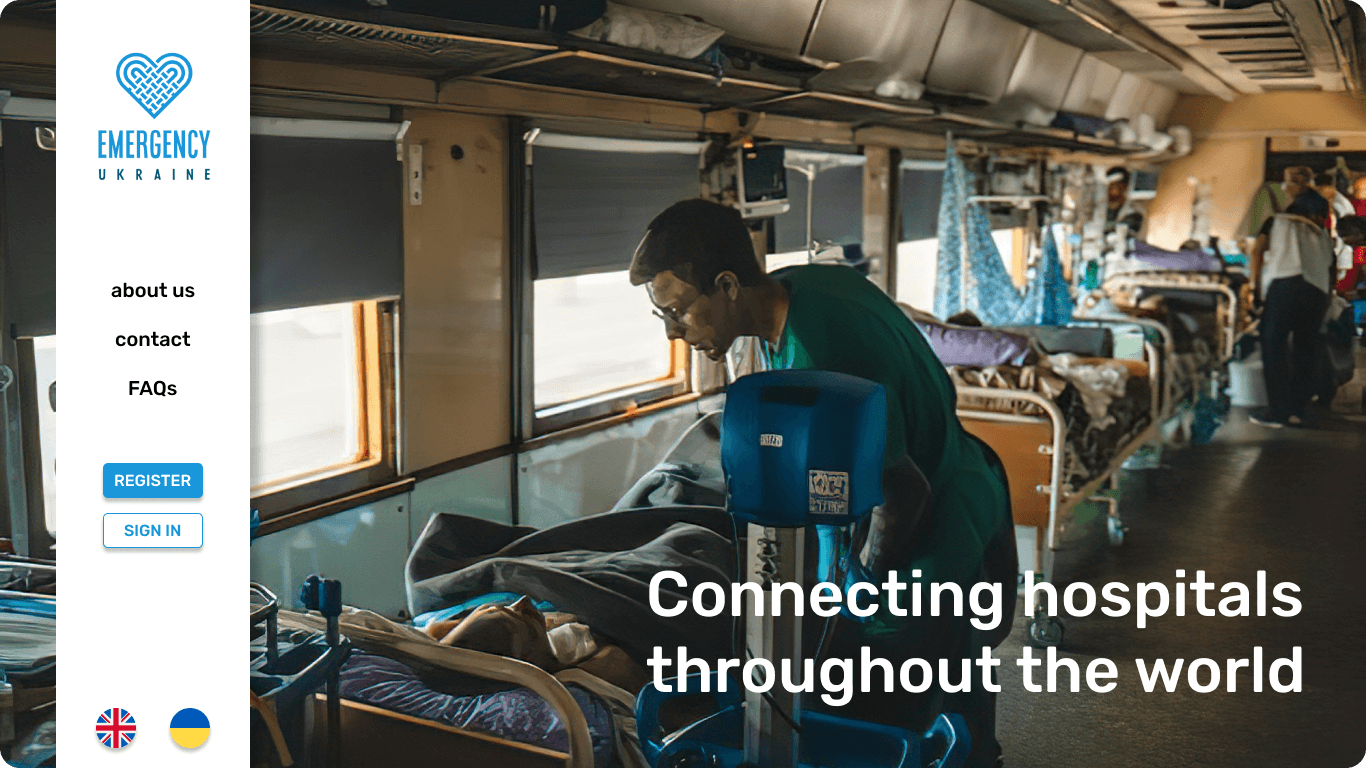
Emergency Ukraine
Special Jury Award — Global Innovation Challenge 2022
During the 2022 Ukraine conflict, 40–70% of medical donations were wasted, mostly because the wrong supplies reached the wrong hospitals rather than any real shortage. This case study is about that coordination problem, not interface design.
Year
2022
Role
Lead UI Designer · Primary Researcher · Information Architecture · User Flows · Prototyping
Team
4 UX designers · Germany & USA (distributed)
Platform
Responsive web
Deck
View presentation ↗
The context
At least 3,000 Ukrainians died due to lack of chronic health treatments. 40–70% of donations didn't comply with WHO guidelines. Refugees carried no medical records. The supply chain was broken in every direction.
I was the only team member to conduct primary research directly in the field, interviewing three Ukrainian doctors actively working during the conflict. Their accounts pointed to something counterintuitive: the real bottleneck was supply relevance and patient continuity, not volume.
Supply relevance and patient continuity were the real bottleneck, not supply volume.
Why donations kept failing
Ruslana — Cardiologist, Lviv
Her patients have chronic conditions — heart disease, diabetes — but trauma care consumed every resource. She can treat a bullet wound. She cannot get the insulin her patients need to survive next month. The problem isn't a shortage of donated supplies. It's that the supplies arriving are the wrong ones.
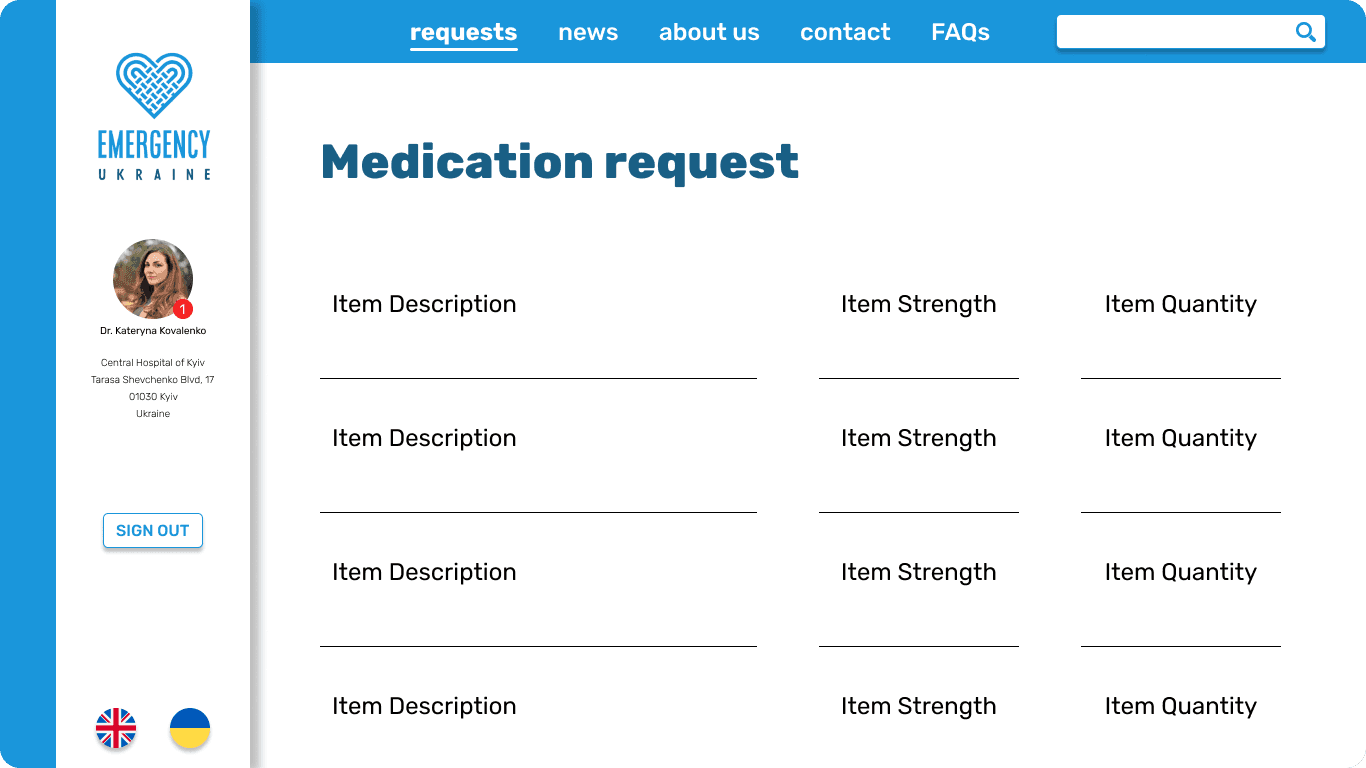
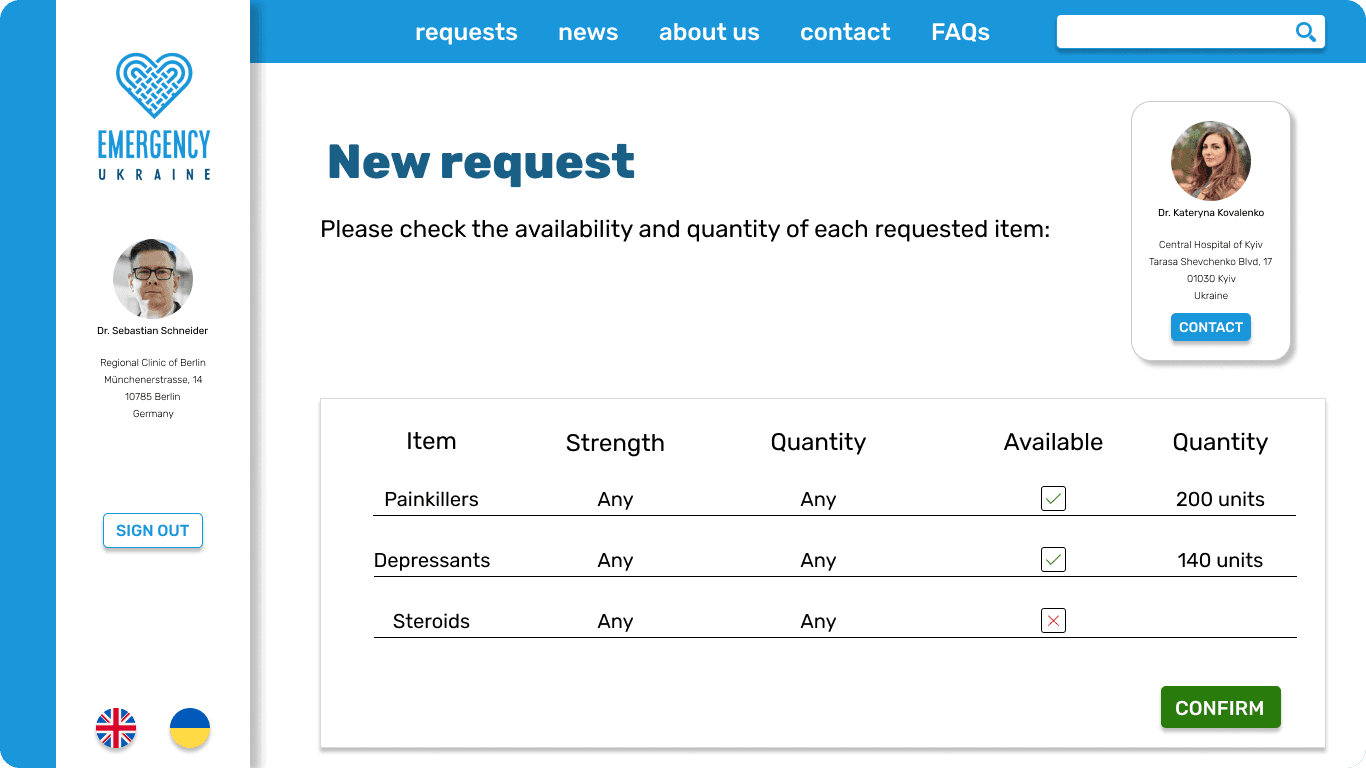
Design response: hospitals must request specific medicines by name and quantity, not receive generic donations.
Nikolai — Oncologist, Kyiv
His cancer patients fled Ukraine without their records. They're now in hospitals across Germany and Poland — but their new doctors don't know their diagnosis, treatment stage, or what medication they were on. Without that information, treatment can't safely continue.
Design response: patient records must transfer securely across borders, in multiple languages, accessible to both the patient and receiving hospital.
What we built
Hospitals request specific supplies, not generic donations. Patient records transfer securely across borders. A confirmation loop before every shipment directly addresses the 40–70% donation waste problem.
Outcome
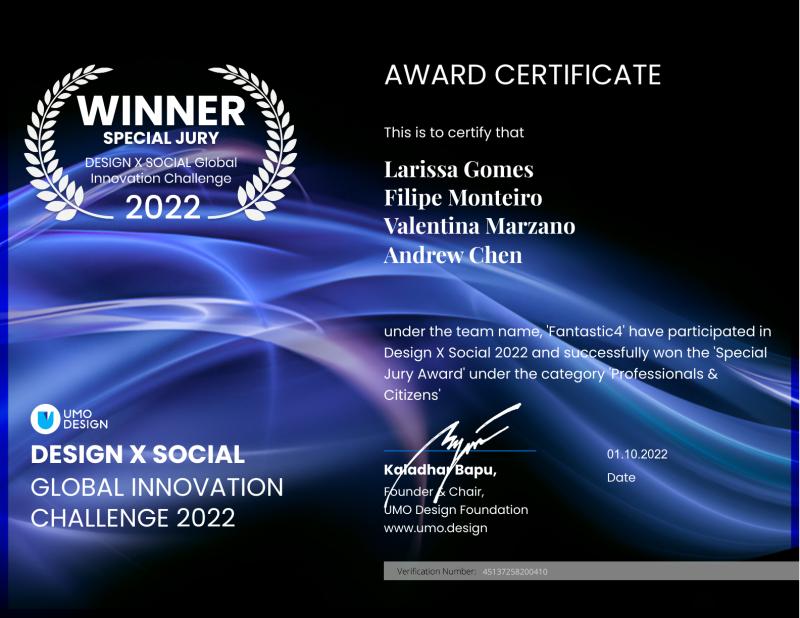
Special Jury Award, Design X Social 2022, Global Innovation Challenge. Category: Professionals & Citizens. The jury recognised the platform's potential to address humanitarian gaps beyond Ukraine. A model for other risk areas around the world.
The interface stays intentionally simple because the real design problem lived in the system, not the screens.